AI hallucinates software packages and devs download them – even if potentially poisoned with malware
xz attack
Nothing original to say, but Timeline of the xz open source attack is a really interesting story and I predict we’ll see more incidents like this. Hopefully they’ll get caught before they do too much damage.
Book 8088 PSU
I bought one of these interesting devices: Book 8088 v2.0.
I hope to have more detailed posts, but for the moment: the charger that came with it looks a little unsafe and definitely doesn’t have a UK plug. I asked for the specs for the PSU to find my own, which doesn’t seem to be published anywhere. They got back to me with this information:
100-240V50-60Hz
Output: 12VDC1.5A (rated 1.5A, peak 2.0 A)
Plug: default 5.5*2.1 with circlip
I’ve ordered a matching one which has a UK plug and hopefully might even conform to some safety standards, but hopefully this is useful information for someone.
Simple DOS fun
I’ve been meaning to post more about the ESP32-SBC-FabGL board from olimex for a while now.
I’ve now got the board itself, via thepihut in the UK, and the case via tindie and agon australia.
Combining it all with some instructions I found from github, I’ve achieved my current goal, built the PC Emulator, and have a board that semi-directly runs MS-DOS. Ok I recognise there’s technically a layer of emulation happening, but for practical purposes it boots pretty directly to a DOS prompt. Sound is terrible but I’m pretty sure I remember the original having awful sound as well so that’s accurate emulation.
Anyway, simple dos fun. I’d quite like a board from monotech pcs for the fully real experience, but this is so much smaller and cheaper, even if it’s technically not “real”.
get rid of the backpack
Mark Pilgrim had a blog post that was then reblogged by someone else (Mark no longer has a blog): The Pursuit of Happiness
- Stop buying stuff you don’t need
- Pay off all your credit cards
- Get rid of all the stuff that doesn’t fit in your house/apartment (storage lockers, etc.)
- Get rid of all the stuff that doesn’t fit on the first floor of your house (attic, garage, etc.)
- Get rid of all the stuff that doesn’t fit in one room of your house
- Get rid of all the stuff that doesn’t fit in a suitcase
- Get rid of all the stuff that doesn’t fit in a backpack
- Get rid of the backpack
Like the person I linked to, I think about this post a lot.
(I can’t remember if I’ve blogged this before, but I think about this so much I feel it deserves blogging multiple times)
New Olimex ESP32 board
Interesting looking board from Olimex. The name isn’t very revealing, but https://olimex.wordpress.com/2023/05/25/new-open-source-hardware-design-is-verified-esp32-sbc-fabgl-single-board-computer-based-on-fabgl-library-with-ps2-keyboard-mouse-and-vga-display-with-many-retro-computer-emulators/ suggests it can do quite a bit of fun stuff and interesting retro emulators.
Twitter now requires an account to view tweets
Twitter now requires an account to view tweets
Elon making it easier and easier to quit twitter.
Mandelbrot in BASIC
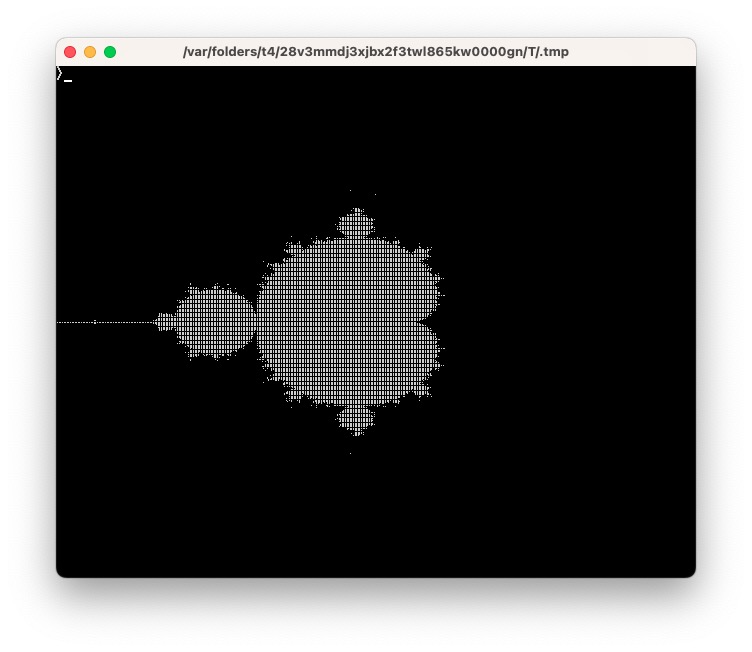
A bit more nostalgia, this time BBCSDL and a slightly dodgy Mandelbrot generator:
1 |
|
And the output: